Generative AI Sparks a New Era in Ergonomics: Virtual Subjects Help Design Safer Machines
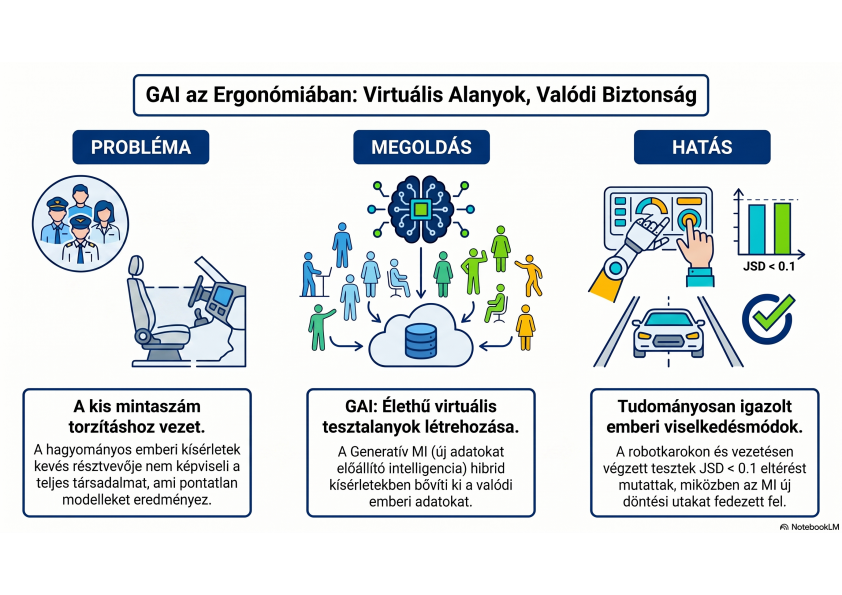
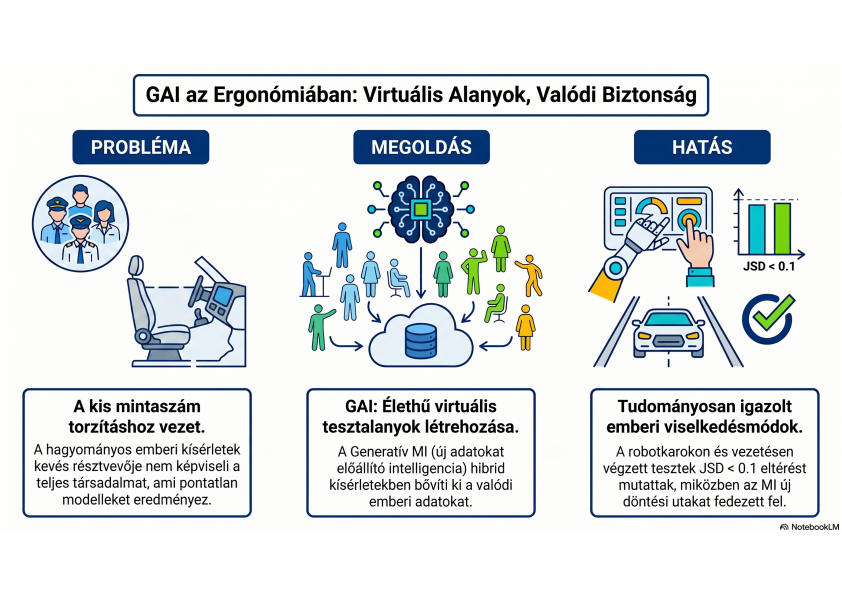
Scientists have long studied how humans interact with machines, but traditional experiments struggle to recruit a large and diverse enough pool of participants. This often results in incomplete behavioral data that fails to fully represent how different people react in high-pressure or unexpected situations.
To solve this dilemma, researchers introduced generative artificial intelligence (GenAI) to create virtual test subjects. By learning from real, limited human data, these AI models can generate thousands of simulated, highly diverse decision-making scenarios, essentially expanding the experiment artificially.
Tested in complex scenarios like human-machine collaborative driving and space station robotic arm operations, this hybrid virtual-real approach successfully produced highly accurate and diverse behavioral patterns. This breakthrough is significant because it allows for the rapid, cost-effective creation of robust systems that understand and adapt to personalized human behavior better than ever before.
This research strongly highlights Obuda University’s commitment to the strategic areas of artificial intelligence and advanced robotics, showcasing how highly innovative AI applications and international collaborations can lead to safer, smarter, and more reliable human-machine systems in the future.
Keywords Artificial intelligence, ergonomics, human-machine interaction, virtual simulation, advanced robotics.
Further Details Ye, Peijun, Yijia Li, Imre J. Rudas, and Fei-Yue Wang. “Generative AI-Driven Ergonomics: A Virtual-Real Hybrid Experiment for Human Factors Engineering.” IEEE Transactions on Cybernetics (2025).
Abstract Ergonomics or human factors engineering (HFE) mainly exploits human experiments to discover one’s cognitive and behavioral mechanisms. Such a paradigm, however, suffers from the scale of subject group and the extent to which they can stand for the whole studied population. Additionally, for real-time human–machine tasks, the experiment-modeling-validation-application path may not be applicable since the experiment cannot be flexibly conducted to update cognitive models, leading to a failure of the online system control and management. To solve the dilemma, this article proposes the generative artificial intelligence (GAI)-driven ergonomics to augment the HFE research. By introducing GAI techniques, virtual-real hybrid experiments are combined and supplement more heterogeneous samples, enhancing the input diversity for cognitive modeling and behavioral learning. The case studies of human–machine cooperative driving and aerospace robotic arm operation indicate that the innovative paradigm can effectively and efficiently augment the human experiment data. It can elevate the generality and robustness of human models.
Keywords Cognitive modeling, ergonomics, generative artificial intelligence (GAI), human factors engineering (HFE), psychology.
The original publication is available at the following link: https://doi.org/10.1109/TCYB.2025.3634826